Overview
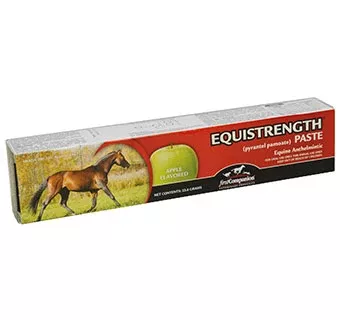
First Companion EquiStrength Pyrantel Pamoate Paste is a 23.6 g oral paste dewormer for horses, providing effective control of large and small strongyles, pinworms, and roundworms (Parascaris equorum) through the anthelmintic action of pyrantel pamoate. Pyrantel pamoate works by causing spastic paralysis of susceptible worms, leading to their expulsion from the GI tract. As one of the three primary anthelmintic classes used in equine deworming programs (alongside ivermectin/moxidectin and fenbendazole), pyrantel pamoate plays an important role in rotation-based deworming strategies — helping to reduce the development of anthelmintic resistance by alternating drug classes. Pyrantel is particularly valued for its efficacy against small strongyles (cyathostomins) and is safe for use in horses, including pregnant mares and foals as young as 8 weeks. The calibrated, weight-adjustable syringe allows precise dosing based on body weight. Each 23.6 g tube treats one average-sized horse.
Key Features
- Pyrantel pamoate oral paste — effective against large and small strongyles, pinworms, and roundworms
- Causes spastic paralysis of susceptible worms for effective GI expulsion
- Key anthelmintic class for rotation-based deworming programs to reduce resistance development
- Safe for use in pregnant mares and foals as young as 8 weeks
- Calibrated, weight-adjustable syringe for precise dosing by body weight
- Single tube treats one average-sized horse
Specifications
- Brand: First Companion / EquiStrength
- Active Ingredient: Pyrantel Pamoate
- Form: Oral Paste
- Net Weight: 23.6 g per tube
- Species: Horses (including pregnant mares and foals 8 weeks and older)
Best For
- Rotation-based equine deworming programs alternating pyrantel with ivermectin or fenbendazole
- Control of large and small strongyles, pinworms, and roundworms in horses
- Deworming pregnant mares and young foals where pyrantel’s safety profile is preferred
- Horse owners building a complete deworming rotation using all three primary anthelmintic classes
Follow all label directions for dosage based on body weight. Consult your veterinarian for guidance on equine parasite management, deworming rotation strategy, and fecal egg count monitoring to assess anthelmintic efficacy and resistance.